They say,“Paul was wrong about a lot of things, so we don’t have to go by what he said.”

What things?

Peter, the one chosen by Jesus to be the lead apostle had this to say about Paul’s writings:

Bear in mind that our Lord’s patience means salvation, just as our dear brother Paul also wrote you with the wisdom that God gave him. He writes the same way in all his letters, speaking in them of these matters. His letters contain some things that are hard to understand, which ignorant and unstable people distort, as they do the other Scriptures, to their own destruction. 2 Peter 3;16,17

Peter refers to Paul as “our dear brother”, said that Paul wrote “with the wisdom that God gave him.” He calls Paul’s writings “Scriptures” and that those who distort them are “ignorant and unstable people” who are headed for destruction by doing so.

Some protest that Peter’s “opinion” isn’t a good example because he was “always saying the wrong thing.” The Bible is unique in not hiding people’s miss-steps, even sins.  However, none of the inappropriate things that Peter said (Matthew 16;22,23; 17:4) were for our instruction but only his reactions to the utterly new things he heard and saw.

Of course, Jesus is the better witness:

But the Lord said to Ananias, “Go! This man is my chosen instrument to proclaim my name to the Gentiles and their kings and to the people of Israel. Acts 9:15

Jesus sought Saul of Tarsus/Paul out and appeared to him personally to call him to be his follower.  Jesus chose Paul to proclaim his name to us so we pick and choose what we observe of Paul’s teachings* at peril of rejecting Jesus’ commands.

*Perhaps a few things are only for the culture but probably not as many as people think—and everyone seems to have differing opinions on this.
They say, “It would have been better if God hadn’t given Hezekiah another fifteen years of life.”

They say, “It would have been better if Hezekiah had gone on and died and not asked to be healed since his son, the extremely wicked King Manasseh was born during Hezekiah’s extra fifteen years.”

God told Hezekiah his time was up at the age of only thirty-nine (2 Kings 20:1) but Hezekiah cried out to the Lord to remember his faithfulness and heal him (v.3).  The Lord heard his prayers and tears (vs. 4-6) and healed him—he even gave him a sign (vs. 8-11).

From a very narrow view, I can see how some might think that it would have been better if Manasseh, a king who led the Israelites into horrendous idolatry (even sacrificing his son in the fire, 2 Kings 21:6) had never been born but God has a broader view.  First of all, to say that Hezekiah should not have been healed is to say that his faithfulness (to God) or his prayers should not have influenced God.  Next, it is to say that God made a bad decision in healing him.

Though Manasseh’s son Amon was also evil (21:20) Amon’s son Josiah was a righteous king who restored the Book of the Law and renewed the covenant.  Then we fast forward to the gospel of Matthew in the New Testament and in reading Jesus’ human genealogy (Matthew 1), we find not only Hezekiah (v.10) but the troublesome Manasseh and the righteous Josiah!

So while this was not Jesus’ direct bloodline but Joseph’s and though not his birth father, Joseph was the man selected by God to raise Jesus to manhood here on earth.   God used Joseph’s lineage to place Jesus’ birth in Bethlehem, the City of David, in fulfillment of prophecy.  (Micah 6:2; Matthew 2:6)  Without Hezekiah’s extra fifteen years there would have been no Joseph.

To sum it up, God made the right decision in honoring Hezekiah’s faithfulness and healing him.  Yes, his son Manasseh was very evil but that was his personal rebellious choice (and that of the Israelites in following him).  God still had a plan for good King Josiah, the faithful Joseph who watched over Jesus as he was born and grew, and the fulfillment of prophecy concerning Jesus.  He also had a plan for all who would follow Jesus—to rescue them from the dominion of darkness and bring them into the kingdom of light and eternal life!  (Colossians 1:12, 13)

They say,”Peace an indicator of God’s will.”

It is said, “You can tell if you are in God’s will by the ‘indicator of peace’—if you are in God’s will you will have peace, if you’re not, your peace will lift.”

If this were true, Jesus would have been out of God’s will in the Garden of Gethsemane and in his suffering on the cross. His was not a picture of peace (the kind referred to in this saying) but of agony, even questioning, though he gained what might be called resolve.

Using the peace as indicator formula has enabled Christians to come up with some outrageous self-permissions such as “It’s okay if I have a room mate of the opposite sex because we aren’t doing anything,”(yet) or “I have peace about leaving my husband because God wants me to be happy.” Remember the adage from the 1960’s? “If it feels good, do it.” The human mind can manufacture all sorts of things to justify what it wants—or lie about it.

No, the best indicator of God’s will is what the Holy Spirit has already spoken in the Bible (especially the New Covenant). You may think that it doesn’t cover everything for contemporary living—dig a little deeper, make sure you’re asking the right questions (the most basic ones)—you might be surprised how much is there.

They say,”God allows sickness to teach us something.”

I know of no New Testament scripture (since we “followers of Jesus” are people of the New Covenant) that even hints at this. The only one that is remotely close is John 9:3, the account of Jesus saying of the man born blind, “Neither this man nor his parents sinned,” said Jesus, “but this happened so that the work of God might be displayed in his life.” Jesus immediately healed him. The work of God in this man’s life was his healing, not the blindness!

Jesus said that the devil comes to kill, steal and destroy but he (Jesus) came to give abundant life—not a lesson from sickness! (John 10:10)

The reason the Son of God appeared was to destroy the devil’s work. I John 3:8

No, God permits sickness and other things that are of the devil to come into our lives so that we can fight it! That’s what the “full armor of God” is for (Ephesians 6:11-18). That’s what the “gifts of the Spirit” are for (1 Corinthians 12:7:11).

The weapons we fight with are not the weapons of the world. On the contrary, they have divine power to demolish strongholds. We demolish arguments and every pretension that sets itself up against the knowledge of God, and we take captive every thought to make it obedient to Christ. 2 Corinthians 10:4,5

When sickness comes your way, don’t embrace it—fight it!

Note: Of course, no teacher wants to let a “teachable moment” get by without using it for teaching. God certainly makes use of every opportunity, but why not be open to his teaching while you’re in health?!

But what about Paul’s “thorn in the flesh?” Read about it here: https://urbanlegendsbible.com/?s=thorn+in+flesh

They say,”God won’t give me more than I can handle.”

It is said,”God won’t give you more than you can handle.”

The rest of the premise says, “So if you’re going through it, God must think you can handle it.”  The possible origin of this “thought for the day” is confusion about Paul’s earlier encouragement that, “And God is faithful; he will not let you be tempted beyond what you can bear. But when you are tempted, he will also provide a way out so that you can endure it.” (1 Corinthians 10:12-14)

Paul also said that he and his co-workers “were under great pressure, far beyond our ability to endure, so that we despaired even of life.  Indeed, in our hearts we felt the sentence of death. But this happened that we might not rely on ourselves but on God, who raises the dead.” (2 Corinthians 1:8b,9)

God won’t let you be tempted with more than you can resist because he gives you a way out. Handling difficulties or trials is not about our ability but our reliance on God’s mighty power working in our behalf.

The Antichrist

The Bible makes no mention of a “capital-a”, one person, Antichrist but many “antichrists” who had gone out from the first century church (yes, I checked the Greek). The term comes from John’s epistles in which he warns of the “Many deceivers who do not acknowledge Jesus Christ as coming in the flesh have gone out into the world.  Any such person is the deceiver and the antichrist.” (2 John 7)  Certainly there are also many today who persist in unbelief and those who “deny that Jesus is the Christ” (1 John 2:22) and/or “who do not acknowledge Jesus Christ as coming in the flesh” (2 John 7)—these have the same spirit of antichrist.

But these are the criteria, not as many believe today–having influence or being a persuasive speaker.  This misinterpretation of the Scriptures has led to slanderous accusations of nearly any man who has been an international leader, whether political or religious, in last 100 years or so.  If you’re a follower of Jesus going around fearfully pointing a finger at such men just because they have influence or a good speaking style—Stop it!  You will have to answer one day for every careless word. (Matthew 12:36)

Instead, make sure that you aren’t one of the ones who “runs ahead and does not continue in the teaching of Christ…” and that you don’t welcome the one who “does not bring this teaching”. (2 John 9,10) The Church is all too willing to welcome false teachers these days. Don’t be distracted by non-Biblical paranoia—just make sure you’re obeying Jesus’ teachings and urge others to do the same.

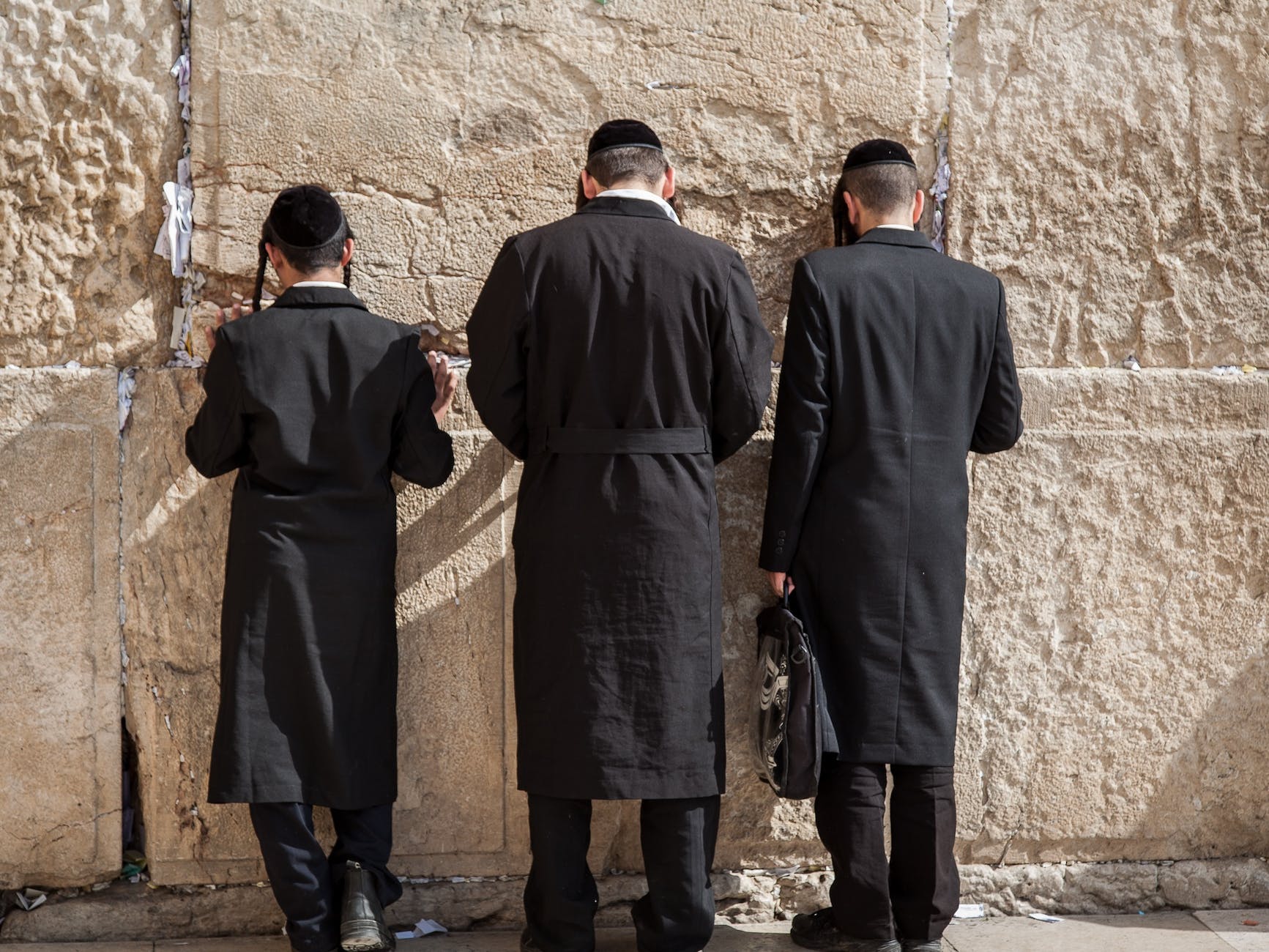
They say, “The Temple in Jerusalem has to be rebuilt before Jesus can come back.”

It is said,“The Jerusalem Temple must be rebuilt before Jesus comes back.”It

The Bible doesn’t say this.  There are some people who, in past 150 or so years have built a template of eschatology through which they interpret the Bible. They project Ezekiel’s vision of rebuilding the Temple thousands of years into the future (as in any year now) but in fact, “Ezekiel’s” Temple was already rebuilt after the Babylonian exile. (Ezekiel chapters 40-43; see also the books of Ezra and Nehemiah)

Because of Jesus’ death and resurrection, there is no longer a need for the Temple and its sacrificial system. (Hebrews 10:1; Ephesians 2:14)  Instead, those who follow Jesus are “God’s temple and “God’s Spirit lives in you”. (I Corinthians 3:16; see also Acts 17:24, I Cor. 3:17, 6:19)

Photo by Pixabay on Pexels.com

They say, “If we understood God, he wouldn’t be God.”

God IS.  Nothing we do or don’t do determines God’s being or character. The Bible is choc-full of admonitions to “Get wisdom, get understanding, though it cost you everything you have.”(Proverbs 4:7)  The Good News is a revelation–a revealing of God, not a hiding. The point at which people get confused is they think that any understanding of God must come from their own brains’ reckoning (they also forget that God created our brains) rather than from the revelation of the Holy Spirit.

They say,”Spiritual healing is more important than physical healing.”

It is said,“Even though he didn’t receive physical healing (and died), he got the ultimate healing—a spiritual one.”It i

If a person is a follower of Jesus, we can rejoice that when he dies, it’s not the end and his spirit will continue in Jesus’ presence though his body was not healed.  (Take your questions about why he wasn’t healed to Jesus and his word—not to the “traditions of men” or your imagination.)  However, the idea that the physical body (and thereby physical healing) is less important or unimportant, that only the spiritual counts, doesn’t come from the Bible but from Gnosticism, which taught that material things are evil and only the spiritual is valuable.  Paul warned Timothy about such teachings. (1 Timothy 6:20, 21)

Physical healing was/is so important that Jesus considered it proof that he was “the one who is to come”. (Luke 7:20-23)

They say, “Death the ultimate healing.”

If a person has died, (sorry to have to put it so bluntly) his body is not healed; it is dead until the last day when it will be renewed.

The Bible does not portray death as healing— Jesus never said, Ah, because this person has died, she has received the ultimate healing. In fact, Jesus raised every dead person he encountered. The Bible does say that death is an enemy—the last one for Jesus to destroy. (1 Corinthians 15:26)  While death is not our friend, Jesus removes the sting of death by receiving his followers’ spirits on the other side of it.

The Resurrection of the Dead on the final day is the ultimate healing.